
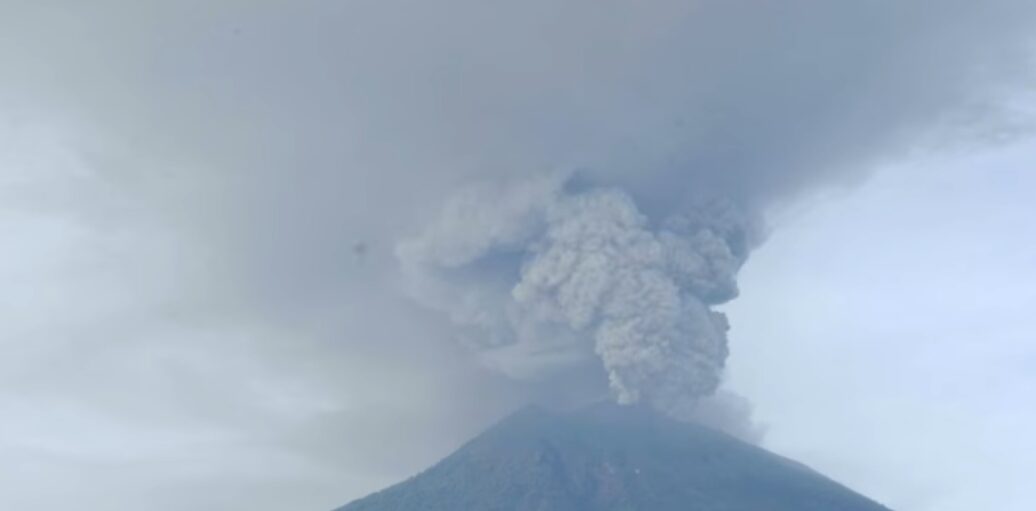
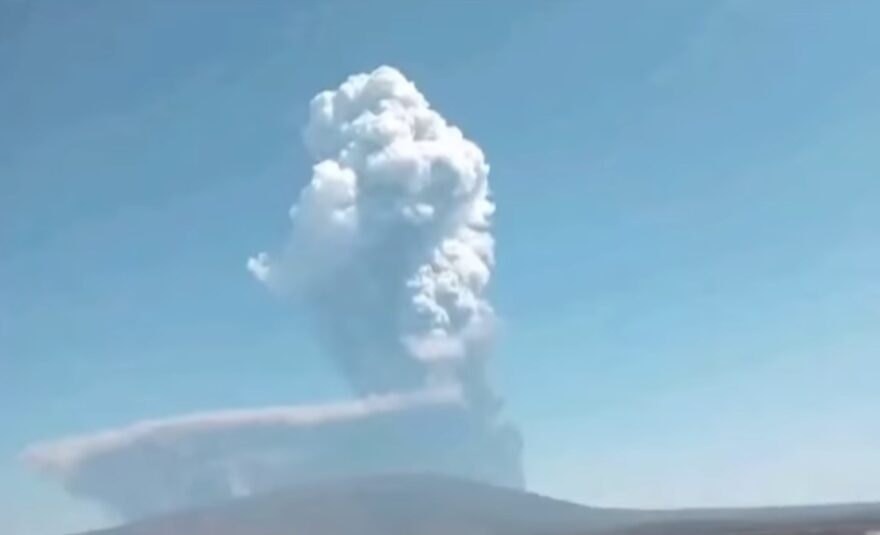
In an unusual and fast-moving atmospheric event, a massive plume of volcanic ash from Ethiopia has travelled thousands of kilometres across the Red Sea, passing over Oman and Yemen, and finally reaching India — including the national capital, Delhi. The ash was released after the sudden eruption of the Hayli Gubbi volcano, a mountain long believed to be dormant for several millennia.
The eruption began early on Sunday, sending an enormous ash column high into the atmosphere and triggering aviation warnings across multiple countries. As the ash drifted eastwards, several airlines were forced to cancel, delay, or reroute flights across India, prompting widespread travel disruptions and renewed questions about how vulnerable global aviation remains to volcanic activity.
A Dormant Volcano Roars Back to Life
The Hayli Gubbi volcano in Ethiopia is not one that typically makes headlines. Researchers say it has been dormant for thousands of years, making Sunday’s eruption both surprising and scientifically significant. The eruption released a towering plume of volcanic ash reaching altitudes between 8.5km (5.2 miles) and 15km, according to India Meteorological Department (IMD) chief Mrutyunjay Mohapatra.
Unlike coarser debris from volcanic explosions, these ash particles are tiny, razor-sharp fragments of rock and glass. While invisible to the naked eye from a distance, they pose a serious danger when airborne. The primary risk: aircraft engines.
“Volcanic ash can melt inside jet engines, forming glassy deposits that cause engine failure,” aviation expert Shivam Chaudhary explains. “Even low concentrations are risky because they erode engine blades, sensors, and windscreens.”
Ash Cloud Reaches India, But Little Risk to Air Quality
As the ash plume moved eastwards, satellite imagery showed it stretching over the Arabian Peninsula and entering Indian airspace late Monday night. Delhi and parts of northern India reported mild haze on Tuesday morning, but meteorologists emphasised that the ash concentration remained extremely low.
“It is unlikely to affect weather conditions or air quality,” Mohapatra told the BBC. He added that the ash appeared to be shifting further northeast and was “headed towards China” as of Tuesday afternoon.
Delhi’s air quality was already rated “very poor”, but experts clarified that the volcanic ash had little to do with it. Pollution levels in the city were driven primarily by existing urban emissions, traffic, and winter smog.
Private weather agency Skymet said that while volcanic ash clouds are notoriously hard to predict, IMD models suggested skies over Delhi would clear by Tuesday evening.
Air Travel Disruption: Airlines Cancel, Reroute, and Delay Flights
The aviation sector felt the immediate impact of the drifting ash cloud. Air India cancelled at least 11 flights, while IndiGo, Akasa Air, and international carriers such as KLM also faced disruptions. Aircraft were rerouted to avoid affected corridors, leading to extended flight times and last-minute scheduling changes.
IndiGo issued a statement on X (formerly Twitter), saying the airline was monitoring the situation “in coordination with international aviation bodies.” Mumbai Airport also posted alerts urging passengers to check flight statuses before heading to the terminal.
India’s aviation regulator, the Directorate General of Civil Aviation (DGCA), released an advisory urging airlines to exercise maximum caution. Pilots were instructed to immediately report any suspected ash encounters — such as unusual engine performance, smoke-like odours in the cabin or visibility issues — which can serve as critical early-warning signals.
The DGCA also mandated inspections of aircraft operating near potentially affected zones and advised airlines to “suspend or delay operations to impacted airports if conditions deteriorate.”
Uncertainty Over Ash Contamination Levels
A key challenge in handling volcanic ash is that its density in the air can vary dramatically, and measurements require specialized instruments that must be positioned in advance — something impossible during a sudden eruption.
“There was no time to prepare sensors or monitoring instruments for this eruption,” said GP Sharma, President (Meteorology and Climate Change) at Skymet Weather. “So the level of contamination is not known.”
Typically, volcanic ash presence is classified into low, medium, or high contamination levels. Each category comes with strict limits on how long an aircraft can safely fly in those conditions before engines or sensors risk damage. Without clear data, aviation authorities prefer to err on the side of caution, leading to delays and diversions even if ash levels are later found to be harmless.
How Rare Is a Transcontinental Ash Cloud?
Though volcanic ash clouds are not unheard of, ones large enough to affect flight paths across multiple continents are rare. The most notorious example is the 2010 eruption of Iceland’s Eyjafjallajökull volcano, which sent ash streaming across European skies. The result was chaos: UK and European airspace shut down for days, causing the biggest aviation shutdown since World War II and grounding millions of passengers.
Sunday’s eruption in Ethiopia is smaller in scale, but it highlights how interconnected modern airspace has become — and how a single remote volcano can interrupt air traffic thousands of kilometres away.
Atmospheric scientists say the path taken by the ash cloud is unusual but not unprecedented. Strong upper-level winds over the Horn of Africa and the Middle East helped carry the ash across the Red Sea and into south Asia. As global climate patterns shift, these wind patterns may become more variable, potentially altering the way ash plumes disperse in future eruptions.
Authorities Expect Quick Dissipation — For Now
Despite the widespread concern, IMD expects the ash plume to disperse relatively quickly. Wind speeds and atmospheric mixing over northern India are likely to dilute the ash by Tuesday night.
Still, aviation authorities remain on alert. Because volcanic ash can linger in higher altitudes even after disappearing from ground-level sight, airlines will continue avoiding the affected air corridors until meteorologists confirm they are safe.
As of now, India has not issued any major airspace closures, but individual airlines are making their own operational decisions based on risk assessments and evolving satellite data.
A Reminder of Nature’s Unpredictability
The Hayli Gubbi eruption — from a volcano silent for thousands of years — serves as a vivid reminder that Earth’s geological systems remain unpredictable. With air travel more interconnected than ever, even a single unexpected eruption can trigger ripple effects across continents.
For now, passengers are advised to stay updated on airline notifications and travel advisories. Scientists, meanwhile, will be studying this rare ash plume closely — both to understand the eruption itself and to improve forecasting models for future events.
As global travel continues to expand, experts say such volcanic incidents, though rare, will remain a part of the aviation risk landscape. And as this week shows, a plume of ash from a distant mountain can still bring the world’s busiest travel routes to a standstill within hours.